Precision PPM Tools for
Science & Engineering
Professional-grade conversion calculators for chemistry, water treatment, and industrial applications.
Water Quality & Hydroponics
Tools for water treatment, aquatics, and nutrient solutions.
PPM to EC Calculator
Convert TDS PPM to Electrical Conductivity (µS/cm & mS/cm).
PPM to NTU Calculator
Estimate Turbidity (NTU) from Total Suspended Solids (TSS) in PPM or mg/L.
PPM to Water Hardness Calculator
Convert PPM or Ion Concentration (Calcium/Magnesium) to Water Hardness units (GPG, dH, fH, mmol/L).
EC to TDS (PPM) Calculator
Convert Electrical Conductivity (µS/cm) to TDS PPM.
ORP to PPM Calculator
Instantly estimate Free Chlorine (PPM) from ORP (mV) using our advanced algorithm that adjusts for pH and CYA.
NTU to PPM Calculator
Estimate TSS PPM from Turbidity (NTU) based on water source type.
Air Quality & Environment
Gas detection, safety compliance, and environmental monitoring.
PPM to mg/m³ (CO₂) Calculator
Convert CO₂ volumetric PPM to mass concentration (mg/m³) using the ideal gas law.
mg/m³ to PPM (CO₂) Calculator
Convert CO₂ mass concentration (mg/m³) to volumetric PPM using the reverse ideal gas law.
PPM (Mass) to PPMv Converter for Gases Calculator
Convert Parts Per Million by Mass (PPMw) to Parts Per Million by Volume (PPMv). Essential for converting lab weight analysis to gas volume limits.
Formaldehyde mg/m³ to PPM Calculator
Convert Formaldehyde (HCHO) mass concentration (mg/m³) to volumetric PPM. An ideal gas law calculator featuring OSHA safety limits and custom temperature/pressure adjustments.
Formaldehyde PPM to mg/m³ Calculator
Convert Formaldehyde (HCHO) volumetric PPM to mass concentration (mg/m³) with our dynamic Ideal Gas Law calculator. Supports OSHA, NIOSH, and custom temperature/pressure adjustments for high-precision environmental monitoring.
PPMv to PPM (Mass) Converter for Gases Calculator
Convert Parts Per Million by Volume (PPMv) to Parts Per Million by Weight (PPMw) or mg/m³.
Chemistry & Solutions
Molarity, laboratory dosing, and chemical preparation tools.
PPM Solution Preparation Calculator
Calculate the amount of solute needed for a specific PPM concentration.
PPM to pH Calculator
Relationship calculator (Theoretical approximation).
H₂O₂ Dilution Calculator
Dilution calculator for Hydrogen Peroxide.
pH to PPM Calculator
Estimate H+ PPM from pH level.
PPM to Volume Calculator
Calculate the exact milliliters or drops of liquid solute required to reach a target PPM. An essential dilution tool for hydroponics and chemistry.
mg to PPM Calculator (Dosage) Calculator
Calculate precise PPM concentration from dry powder dose (mg) or liquid stock volume (mL).
Engineering & Conversions
Industrial calculations, physics formulas, and unit conversions.
PPM to Percent Calculator
Convert Parts Per Million (PPM) to Percentage (%) instantly.
PPM to Grams Calculator
Calculate the weight in grams from a PPM concentration.
Grams to PPM Calculator
Convert Grams (mass) to Parts Per Million (PPM) for Solids, Liquids, and Gases.
PPM to PPB Calculator
Accurately convert Parts Per Million (PPM) to Parts Per Billion (PPB) with our trace-level concentration calculator.
PPB to PPM Calculator
Instantly convert Parts Per Billion (PPB) to Parts Per Million (PPM) with our accurate trace-analysis calculator.
PPM to Molarity Calculator
Convert PPM concentration to Molarity (M).
Master the Science of PPM
Parts Per Million (PPM) is more than just a number. It's the standard language for concentration in science, engineering, and environmental safety.
Whether you are mixing nutrients, ensuring water safety, or calibrating sensors, understanding the nuance between PPM (mass) and PPMv (volume) is critical.
Quick reference for common concentration units including PPB, PPT, and Molarity.
Featured Guides
Deep dives and expert knowledge to help you master concentration science.
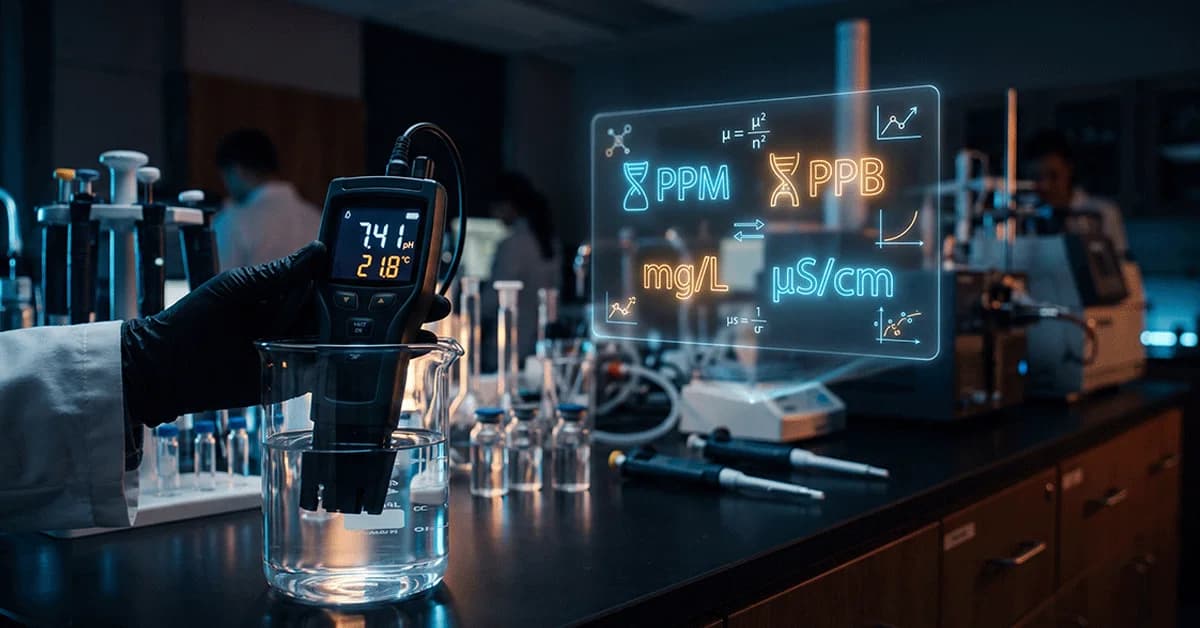
PPM Conversion Chart & Complete Unit Table
Quick Reference GuideEasily convert Parts Per Million (PPM) across mass, volume, and concentration formats using our complete quick-reference conversion chart.

DPMO vs PPM in Six Sigma: The Exact Difference (+ Formulas)
Six Sigma Defect RatesConfused about DPMO vs PPM in Six Sigma? Learn the exact differences, how to calculate them, and how CPK relates to your defect rate.
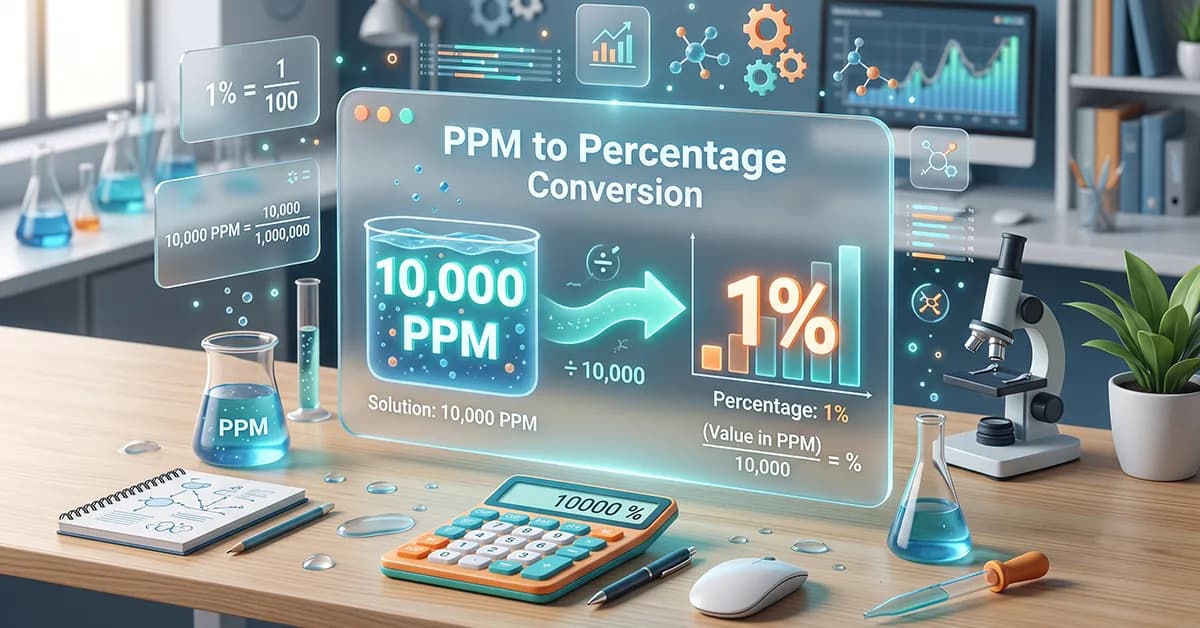
How to Convert PPM to Percent
Formula & Quick GuideLearn how to convert PPM to percent instantly. I explain the exact parts per million to percentage formula with quick conversions for 10, 100 & 10000 PPM.
Why Trust These Calculators?
Our tools are built by engineering professionals and verified against standard chemical references.
Scientific Accuracy
Formulas derived from peer-reviewed sources, ASTM standards, and EPA guidelines.
Zero Data Retention
Calculations run 100% in your browser. We never see, store, or transmit your inputs.
Expert Reviewed
Content regularly audited by qualified chemical engineers and industry experts.